
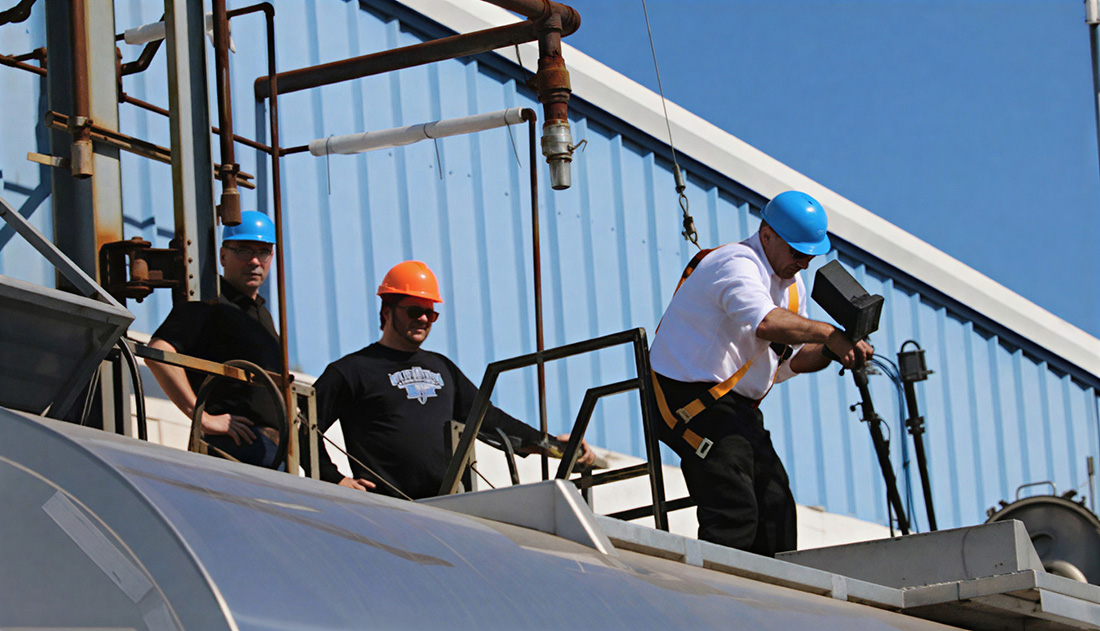
Small leaks in underground storage tanks (USTs) and piping can lead to major environmental hazards, costly repairs, and regulatory fines. Traditional air or water pressure tests may miss pinhole defects, while electronic sensors can give false positives. Helium precision leak testing fills this gap by using one of the smallest molecules in the periodic table to detect even the tiniest breaches. In this post, we’ll explain how helium testing works, why it’s superior to conventional methods, and how to implement it for reliable fuel-system integrity.
1. Why Precision Leak Detection Matters
- Environmental ProtectionUndetected leaks allow hydrocarbons to seep into soil and groundwater, threatening ecosystems and public health.
- Regulatory ComplianceEPA and state UST regulations increasingly demand sensitive leak-detection methods to qualify for permits and avoid penalties.
- Cost SavingsEarly detection prevents expensive soil remediation, tank replacements, and liability claims.
2. How Helium Testing Works
- Tracer Gas InjectionTechnicians introduce a controlled amount of pure helium into the secondary wall or interstitial space of double-wall piping or tanks.
- Mass Spectrometer DetectionA handheld mass spectrometer “sniffs” accessible fittings, couplings, and tank seams. When helium escapes through a defect, the instrument registers a spike in concentration.
- Leak LocalizationThe sensitivity of helium testing (down to 10⁻⁷ mbar·L/s) allows pinpointing micro-leaks smaller than a human hair, often invisible to air or water methods.
3. Key Benefits of Helium Leak Testing
- Unmatched SensitivityDetects micro-leaks that traditional bubble or dye tests can’t find.
- Non-DestructiveNo need to excavate or disrupt service—testing is performed via inspection ports or ballast spaces.
- Rapid ResultsTechnicians receive real-time feedback, enabling immediate repairs without prolonged downtime.
- Versatile ApplicationSuitable for USTs, interstitial spaces, piping networks, and even dispenser sumps.
4. Best Practices & Industry Standards
- Follow ASTM E493/E499 GuidelinesEnsure testing procedures align with ASTM’s protocols for tracer gas leak detection.
- Site PreparationPurge residual liquids and moisture from lines to prevent signal interference.
- Calibration & CertificationUse mass spectrometers calibrated to known helium standards and maintained by NIST-traceable labs.
- Comprehensive ReportingDocument injection volumes, detection thresholds, leak rates, and exact locations—critical for audits.
5. Selecting a Helium Testing Service
When choosing a provider, verify they offer:
- Accredited Technicians: Certified in leak-testing methods and safety procedures.
- Advanced Equipment: Modern mass spectrometers with automatic background correction.
- Full-System Coverage: Ability to access all interstitial spaces and connection points.
- Digital Documentation: Detailed, timestamped reports with GPS-tagged photos of leak sites.
Frequently Asked Questions
Q: How does helium testing compare to vacuum or pressure decay tests?A: Vacuum and pressure decay detect larger leaks (typically ≥10⁻³ mbar·L/s), whereas helium testing can identify defects down to 10⁻⁷ mbar·L/s, offering 1,000× greater sensitivity.
Q: Is helium safe to use in UST systems?A: Yes—helium is inert, non-flammable, and non-toxic. It poses no risk to fuel quality or the environment when used in controlled, minimal volumes.
Q: How often should helium leak testing be performed?A: For double-wall systems, annual testing is recommended. High-risk sites (e.g., high-traffic or corrosive environments) may benefit from semi-annual checks.
Helium precision leak testing is the gold standard for uncovering micro-leaks that threaten fuel-system integrity, compliance, and environmental safety. By partnering with qualified technicians and following best-practice protocols, you can detect and repair defects before they escalate into costly failures.